
Client Case Study - Psychedelic Preparation & Integration
Client Z
Coaching Period:
January 2025 – May 2025
Primary Focus Areas:
Emotional Regulation, Career Transition, Psychedelic Preparation and Integration, Personal Growth, Creative Reconnection
Presenting Concerns:
At the start of the coaching relationship, Client Z presented with the following primary concerns:
Frequent anxiety and panic attacks
Difficulty recovering from a recent breakup
Career dissatisfaction after over 10 years in the same role
Disconnection from creativity, purpose, and community
Intentions & Goals:
Restore emotional balance and reduce panic symptoms
Process grief and release guilt related to breakup
Explore new professional pathways and values
Reconnect with creativity, music, and community engagement
Evaluate and engage with psychedelic-assisted healing
Coaching Approach and Interventions
Methodologies Applied:
Motivational Interviewing (MI)
Psychedelic Preparation and Integration Coaching
Values Clarification and Narrative Reflection
Creative Expression Exercises (Journaling, Storytelling)
Somatic Awareness and Grounding Techniques
Lifestyle Design and Wellness Planning
Tools and Techniques Used:
Weekly integration calls and check-ins
Intention-setting and post-session reflections
Ritual development for morning routines
Emotional tracking and mood regulation tools
Music and storytelling as integration aids
Milestones and Key Developments
January 2025:
Intake and rapport building
Identified core emotional blocks
Completed first psilocybin session: reflected on letting go, internal pressure, and emotional awareness
February 2025:
Second psychedelic journey with focus on self-forgiveness and identity rebuilding
Began creative journaling and explored yoga/community spaces
Greater emotional insight and regulation
March 2025:
Established morning routine and self-care practices
Third psychedelic session deepened awareness and internal clarity
Practiced presence through walks, music, and mindful activities
April–May 2025:
Finished 3 scheduled post-experience integration sessions and then a month of
individual processingNoted reduction in panic and increased self-trust
Reflected on career changes and social re-engagement
Final feedback session showed strong internal shifts and forward-looking perspective
Measurable Shifts and Outcomes
Emotional & Mental Health:
Reduced frequency of panic episodes
Improved ability to pause, reflect, and self-soothe
Capacity to be present and catch old habits/patterns as they are resurfacing
Increased emotional awareness and acceptance
Cognitive & Narrative Shift:
Moved from self-blame to self-compassion
Internal language became more supportive and values-aligned
Behavioral Changes:
Daily journaling and somatic practices, regular exercise routine
Reengaged with music and outdoor activities
Initiated conversations with new communities and began exploring dating
Psychedelic Preparation/Experience/Integration:
Successfully completed three macro-dose psilocybin sessions
Practiced structured integration with reflection and creativity
Expressed interest in future microdosing with a support plan
Client Reflections (Direct Quotes)
“I just feel stuck. I want to find my way back to a version of myself I recognize.” (January 2025)
“It’s absolutely okay that I’m enjoying this.” (February 2025)
“I’m noticing the wonder in everyday things again.” (February 2025)
“I'm not saying everything’s fixed. But I’m more equipped. I actually want to engage with life again.” (May 2025)
A Journey of Growth and Reflection
Z began working with Alva Dean Consulting in January 2025 during a period of transition and personal challenge. He was navigating the emotional aftermath of a breakup, dealing with heightened anxiety, and reevaluating his long-term career. Through a four-month coaching relationship that included psychedelic preparation and integration, Z explored new ways to manage stress, highlight strengths, reconnect with personal values, and clarify his goals.
This case study offers an overview of Z's experiences and reflections during his time with ADC, interwoven with his own words captured in integration calls and feedback sessions.
Starting Point: January 2025
Z came into the process experiencing regular anxiety and moments of panic that impacted his daily functioning. He was unsure about his career direction and carried self-blame following a breakup. Our initial work focused on identifying core concerns, exploring support systems, and beginning to clarify his intentions for potential psychedelic work.
In his own words: “I just feel stuck. I want to find my way back to a version of myself I recognize.”(Initial Intake, January 2025)
He also shared, “I know I need something to change—I just don’t know how yet.”(Initial Intake, January 2025)
He expressed interest in using psilocybin as a tool for healing and insight. We discussed set, setting, and integration, and laid the groundwork for intentional use alongside other wellness strategies.
Themes and Progression
January: First Macro-Dose and Early Reflections
Z’s first macro-dose experience brought awareness to recurring patterns of overthinking, perfectionism, and emotional holding. He began incorporating grounding practices such as daily journaling and light physical activity like walking his dog, stretching, and breathing exercises in the morning.
Session insights included: “Mostly just peeing and crying today”(First Psilocybin Journey, January 2025), showing levity and awareness of how he is 'letting go' of things and purging in different ways, and “I feel tense and relaxed at the same time”(First Psilocybin Journey, January 2025), holding this paradox between his body, mind, and heart.
He began noticing his internal dialogue more clearly: “Why do I have to make everything work?”(First Psilocybin Journey, January 2025) and “Not everything I say has to be profound.”(First Psilocybin Journey, January 2025)
February to March: Adjustments and Small Wins
With more integration support and a second medicine session, Z explored forgiveness, emotional release, and creative practices. He discarded letters from his ex with a mix of relief and sadness. He also expressed greater emotional autonomy:
“It’s absolutely okay that I’m enjoying this.”(Second Psilocybin Journey, February 2025) and “I don’t get to tell her how to feel.”(Second Psilocybin Journey, February 2025)
In reflection, Z noted, “I’m noticing the wonder in everyday things again.”(Post-Session Integration, February 2025)
March: Continued Psychedelic Work and Integration
He maintained new practices such as daily journaling, exercise, and creating a morning ritual and routine to begin his day. Movement and creativity became forms of integration. He also began to express increased self-awareness and confidence.
Spring Reflections and Shifts
By late March and into April, Z spoke about feeling more balanced and willing to explore new steps in life, including reengaging socially and attending events with less fear. His past anxiety regarding driving on the highway to work had remained manageable, showing a sharp contrast to earlier in the year when he would have panic attacks and have to stop on the side of the road. In his final review, he shared:
“I'm not saying everything’s fixed. But I’m more equipped. I actually want to engage with life again. That’s a big shift.” (Feedback Review, May 2025)
He expressed openness to continuing psychedelic work, potentially through microdosing, and emphasized that integration had helped him feel more grounded. Z expressed the benefits of working with a multi-disciplinary team, regularly engaging with therapy as well as coaching/integration work with ADC.
Final Reflections and Feedback Review
During the final feedback review, Z reflected on his initial goals and the tangible shifts he experienced over the four months. He described moving from a state of emotional disconnection and overthinking into one of greater presence and openness. Where he once experienced daily panic and emotional paralysis, he now reported an ability to engage more fully with life and manage moments of uncertainty with greater ease.
The feedback also highlighted key changes:
Before: Overwhelmed by anxiety and uncertainty; caught in cycles of guilt and over-responsibility
After: Greater emotional regulation, ability to pause and reflect, increased self-compassion
Before: Disconnected from creativity and pleasure
After: Reconnected with music, journaling, and storytelling as expressions of meaning and joy
Before: Fearful of what others thought, hesitant in social spaces
After: Willing to show up more authentically, including exploring dating again and rejoining community spaces
Z expressed interest in continuing this kind of work in the future, including experimenting with a microdosing protocol and deepening his creative practices. He now views integration as a long-term process, not a quick fix, and has adopted a more sustainable and kind relationship with himself.
Conclusion
Z’s coaching journey with ADC supported him in managing a difficult life transition while building tools for future resilience. The process helped clarify his direction, highlight his values, strengthen his ability to reflect, and increase his confidence in navigating change.
Prepared by Alva Dean Consulting
ADC Mantra + Core Principles + ALIGN
Our Mantra:

“Integrating practices,
manifesting intentions,
empowering growth”
This is a 3-pronged approach to how we operate in the world, the core of our system, and how we approach “the work”.
“Integrating practices”
is where we start, integrating our life experiences and learnings through a regular practice (read also: ritual, ceremony, habits, rites, patterns, tendencies, inclinations, traditions, customs, routine, procedure, act, liturgy, sacrament, etc.), and its implementation in our daily life. Often we can learn about ourselves through inwardly reflecting with the self, dialogue with others, taking insights gleaned from therapy or spiritual work ― but how do we apply these lessons into our life? How can we make changes to ourselves, in intentional consistent effort and incremental progress, through integrating the whole person - mind, body, soul - our mental, emotional, physical, and spiritual aspects?
“Manifesting Intentions”
after establishing a foundation of practice, we can then start to
act and live intentionally. What does it mean to set an intention? What does it look like to manifest it?
For me, it begins with self-reflection: what is currently going on in my life? What are the contexts that shape my present state? What are the goals I have for the future? What would I like to work on personally, interpersonally, in relationship with self and others, with nature, with spirit?
We can then set an “intention” a goal, a purpose or value or archetype that then guides the actions of the individual. When we have a clear concept that acts as North Star to our choices, the end goal is clear, we merely have to find the path towards it. With self-reflection and by following our intuition, gut, subconscious, we can trust ourselves and our feelings to guide us, held and supported by our values and beliefs.
“Empowering Growth”
once we have our foundational practices and habits set, our ability to set clear and actionable goals guided by our values, we can then be empowered to grow. Each individual holds within themselves the key that unlocks the door to new possibilities and a future we can envision. Once we recognize our strengths, we can lean on them to carry us through any challenge. We can then look at our weaknesses, and then create the space and opportunities to develop them. We know ourselves better than anyone else. We know what our goals are and how to achieve them. It certainly helps when we have the proper system to operate within, and the guiding principles that can help keep oriented on the path, and ALIGN ourselves with true purpose.
Our Core Principles
1. Integration of Wisdom and Science
Principle: Honor the balance between ancient holistic practices and modern clinical approaches, creating systems that are both innovative and rooted in timeless truths.
Guidance: Emphasize the value of synthesis—bringing together diverse perspectives, traditions, and methodologies to create something greater than the sum of its parts.
2. Empowerment Through Personal Systems
Principle: Equip individuals and organizations with tools to design their own sustainable well-being systems, fostering autonomy and resilience.
Guidance: Focus on empowerment by teaching clients how to navigate their own journeys, aligning with their unique strengths, values, and experiences.
3. Storytelling as Transformation
Principle: Use the power of narrative to help individuals and communities make meaning, heal, and grow through their personal and collective stories.
Guidance: Approach every interaction as part of a larger story, helping clients contextualize their challenges and victories within an evolving narrative of transformation.
4. Holistic Growth Across All Dimensions
Principle: Address the mental, emotional, spiritual, and physical dimensions of well-being, ensuring a comprehensive approach to growth and healing.
Guidance: Strive for balance and interconnectedness in your methods, recognizing that wellness is multidimensional and deeply personal.
5. Creating Safe Spaces for Exploration
Principle: Foster environments of trust, curiosity, and non-judgment, where clients can explore, experiment, and discover their full potential.
Guidance: Build relationships based on respect and safety, allowing for vulnerability, deep self-reflection, and courageous transformation.
These principles reflect the essence of our mission, vision, and unique approach
They can serve as touchstones for decision-making, client interactions, and the evolution of our practice
We implement these principles into our daily lives when we “ALIGN” with all our parts and dimensions
-- A.L.I.G.N --
A: Awareness
Concept: Cultivating self-awareness to recognize thoughts, emotions, and patterns that influence well-being. Enable us to be present in the “now”, focus on what is in front of us, not dwell in the past, or be distracted by a future that is not here yet. How can we feel into our bodies and use our different intelligences - brain, heart, and gut - to guide us?
Practical Application:
● Use mindfulness exercises, such as meditation or journaling, to help us observe their inner states. Get the interior out to the exterior, express the self openly.
● Encourage us to identify triggers and behaviors through reflective tools like emotion logs or body scans. Name some of these, write them down to recognize them.
● Introduce grounding techniques (e.g., breathwork or sensory focus) to enhance presence and awareness in the moment. These are tools to use in times of crisis or when we need to regulate.
Implementation: Start sessions with a mindfulness check-in, guiding us to tune into our thoughts, feelings, and physical sensations. We can begin with a small breathing exercise and mindfulness practice, open the container with a thoughtful prayer, or light a candle.
L: Learning
Concept: Teaching us the skills and tools needed to develop personal well-being systems. There are many systems and techniques that can be helpful for us on our journey; how can we research and compile information into a coherent and effective system?
Practical Application:
● Attend workshops or one-on-one coaching on topics like habit building, self-compassion, and emotional regulation.
● Share resources (books, podcasts, articles) tailored to our needs and goals.
● Provide education on integrating spiritual and scientific approaches (e.g., rituals alongside cognitive techniques).
Implementation: Build a personalized learning plan for our own unique selves, tracking progress with measurable milestones. We all have our individual strengths, our own toolkit of skills. Let’s use them to help us through difficult times and times of growth as we work on the parts of us that need it most, becoming more empowered, self-sufficient and whole.
I: Integration
Concept: Bringing together ancient wisdom and modern practices to create a cohesive, sustainable framework for the implementation of learnings and insights. Here we invoke the archetypes of the Hermit and Magician. As a hermit goes to his cave in the mountain to do “the work”, reflect and learn, we too go inward to analyze experiences and insights. And then as a Magician does, we apply these learnings and embed our intentions into actions, using the power of words as spells to create an empowered future we envision for ourselves. This is the final step of the magical process of: “Thinking, feeling, acting” – we then go outward to manifest our intentions and implement into daily life.
Practical Application:
● Encourage us to explore complementary practices like breath-work, yoga, or energy work alongside therapy or medication.
● Design rituals or routines that blend symbolic meaning with actionable steps (e.g., creating a morning ritual for focus and grounding).
● Guide individuals to integrate insights from therapy, psychedelics, or transformative experiences into daily life through a multi-disciplinary approach.
Implementation: Use integration sessions to discuss how we can apply learned tools and insights in our everyday contexts. How can we track our progress and goals as we accomplish them? What new insights develop day to day, week to week, in this ever evolving, iterative process?
G: Growth
Concept: Fostering holistic development across mental, emotional, spiritual, and physical dimensions. We are complex, multi-dimensional beings. We oscillate and move through different states of consciousness to adapt to our surroundings and unique situations. How can we navigate this ever changing human experience with our whole being?
Practical Application:
● Help us set SMART (Specific, Measurable, Achievable, Relevant, Time-bound) goals in each area of wellness.
● Facilitate regular self-assessments or progress reviews to celebrate wins and adjust approaches.
● Use archetypal frameworks, like Joseph Campbell’s The Hero’s Journey, (separation/departure, initiation, and return), to help us view our challenges as steps toward transformation.
Implementation: Create a “growth map” that visualizes our progress and the interconnectedness of our well-being goals. Maybe start a page in your journal to begin exploring the areas of yourself that you would like to work on: Mind, Body, Spirit, Relationships, Lifestyle, Nature.
N: Narrative
Concept: Using storytelling to create meaning, process experiences, and inspire transformation. We all have a story to tell, we all began from somewhere - shaped by the lessons taught to us by love ones, through books and movies. What are the events that lead you to who you are in the present? What inspires you now, what inspired you when you were younger? Where do you want the rest of your life to go, and how can we walk that path with intention and purpose?
Practical Application:
● Guide us to reframe our challenges as part of a larger, empowering life story.
● Use creative writing prompts or visual storytelling (e.g., vision boards) to help us articulate our aspirations.
● Encourage individuals to explore archetypes (e.g., Healer, Helper, Explorer, Hero - Magician, Hermit, or High Priestess from Tarot - Greek gods such as Hermes or Athena) that resonate with our journey.
Implementation: Integrate narrative techniques into sessions, helping us rewrite limiting beliefs and craft empowering personal myths. Write a myth/fable/ story with you as the main character, create a representation of yourself, maybe as your favorite animal, and write stories of healing and wellness, accomplishing goals and growing into aligned purpose.
Bringing ALIGN Together in Practice
To ALIGN holistically, you could:
1. Begin with Awareness: Start each journey by fostering mindfulness and self-reflection.
2. Build Learning Opportunities: Equip us with actionable skills and knowledge tailored to their goals.
3. Focus on Integration: Regularly revisit how we are combining insights and practices into our daily lives.
4. Encourage Holistic Growth: Use progress tracking and goal-setting to keep us moving forward in all areas of life.
5. Inspire through Narrative: Continuously work with ourselves and others to transform stories into ones of empowerment, wellness, and possibility.
——————————————————
ALIGN Writing Exercises
A: Awareness
1: Body Scan Meditation
Sit or lie down comfortably.
Focus on each part of our body, starting from the head and moving downward.
Notice any tension, sensations, or emotions without judgment.
Purpose: Cultivates awareness of physical and emotional states.
2: Thought-Emotion Tracker
Create a simple chart with columns for Trigger, Thought, Emotion, and Reaction.
Fill it out whenever we experience a strong emotion or reaction.
Purpose: Helps us recognize patterns in our responses and increase self-awareness.
3. Sensory Awareness Walk
· During a walk, focus on one sense at a time (e.g., sights, sounds, smells).
· Reflective prompts:
o What details stood out?
o How did focusing on your senses shift your experience?
4. Emotion Naming Exercise
When we feel strong emotions, pause and name them specifically (e.g., "I feel frustrated" instead of "I feel bad").
Reflection: How did naming the emotion impact your reaction?
5. Stream-of-Consciousness Writing
Spend 5–10 minutes writing whatever comes to mind without stopping or censoring.
Reflection: What patterns or themes emerged in your thoughts?
6. Mirror Check-In
Spend a few minutes looking at yourself in the mirror and asking, "How am I feeling today?"
Reflection: What did I notice in my expression or body language?"
L: Learning
1: Personal Toolkit Creation
Have our list of practices, tools, or rituals we’ve learned that support our well-being (e.g., breath-work, journaling, grounding techniques).
Encourage ourselves to create a “toolkit” we can refer to during challenging times.
Purpose: Reinforces learning by consolidating knowledge into practical, actionable, and accessible steps.
2: Daily Micro-Learning
Ask ourselves to commit to learning one small thing daily (e.g., a quote, a breathing exercise, or a new fact about well-being).
We can journal about how it resonates or challenges them.
Purpose: Encourages consistent growth and curiosity.
3. Gratitude Journal
Each day, write down three things we’re grateful for and why.
Reflection: How does focusing on gratitude shift your mood over time?
4. Resource Exploration
Choose one resource (e.g., a book, article, or video) related to personal growth and write down three takeaways.
Prompt: "How can I apply these takeaways to my life?"
5. Self-Compassion Letter
Write a letter to our self as if we were comforting a close friend going through a similar situation.
Reflection: How does showing compassion to myself feel?
6. Mindful Listening Exercise
Have a conversation where we focus entirely on listening without planning our response.
Prompt: "What did I learn about being present in communication?"
I: Integration
1: Ritual Design
Design a ritual that blends symbolic and practical elements.
Example: A morning grounding ritual combining intention-setting (spiritual) with deep breathing (practical). In the evening, light a candle and sit in a comfortable spot and write about our day, note any accomplishments or insights.
Encourage ourselves to experiment and refine the ritual over time, try different methods.
Purpose: Helps us merge insight and action into our daily lives.
2: Integration Journal
After significant experiences (e.g., therapy sessions, meditations, or psychedelic journeys), we are encouraged to write down:
1. What we learned.
2. How it relates to our life.
3. One small action we can take to integrate the insight.
Purpose: Turns abstract insights into actionable, lasting change.
3. Visualization Practice
Visualize ourselves successfully integrating a positive habit into our daily life.
Prompt: "What steps do I need to take to make this visualization a reality?"
4. Symbol Creation
Create a personal symbol (e.g., a drawing, shapes, a name or word) that represents our healing journey.
Prompt: "What does this symbol mean to me, and how can I use it to stay focused?"
5. Morning or Evening Review
Spend 5 minutes at the start or end of the day reviewing our intentions or reflecting on our progress.
Reflection: What worked today, and what can I improve tomorrow?
6. Integration Action Plan
Write down one insight from therapy, a ritual, or a meaningful experience and brainstorm 3 ways to apply it to your daily life.
Prompt: "What small step can I take today to put this plan into action?"
G: Growth
1: Holistic Goal Setting
Set one small goal in each dimension of wellness (mental, emotional, spiritual, physical).
• Mental: Read one chapter of a self development book.
• Emotional: Share a gratitude with someone.
• Spiritual: Meditate for five minutes.
• Physical: Take a short walk.
• Purpose: Promotes balanced and intentional growth.
2: “Success Story” Mapping
• Imagine our life six months or a year from now and write a short story of our “future self” thriving.
• Identify steps we need to take to become that version of ourselves.
• Purpose: Creates a motivating vision and actionable roadmap.
3. Wheel of Life Assessment
Draw a wheel divided into sections (e.g., career, relationships, health, spirituality). Rate your satisfaction in each area from 1–10.
Reflection: Which area do I want to focus on improving, and why?
4. Weekly Reflection and Intention Setting
Every Sunday, reflect on the week:
What went well?
What challenges did I face?
What intention do I want to set for the next week?
5. Growth Affirmations
Write affirmations for each area of wellness (e.g., "I am growing stronger emotionally every day").
Prompt: "How do these affirmations make me feel when I repeat them daily?"
6. Strength Inventory
List your strengths across mental, emotional, spiritual, and physical dimensions.
Reflection: How can I use these strengths to achieve my goals?
N: Narrative
1: Rewrite Your Story
Write about a difficult experience in our life as if it were a movie, a comic, or a children’s book. Change details slightly but keep the core narrative.
Then, rewrite the story where the protagonist (us) grows stronger through the experience.
Purpose: Helps reframe challenges into empowering narratives.
2: Archetype Exploration
Research a list of common archetypes, (e.g., hero, healer, explorer, nurturer), refer to the works of Carl Jung, Joseph Campbell, James Hillman.
Choose an archetype we resonate with and journal about:
1. How it aligns with their current journey.
2. How they can embody it more fully in their life.
Purpose: Strengthens self-identity and fosters a sense of purpose.
3. Life Timeline
Create a timeline of significant events inyour life. Label them as challenges, turning points, or victories.
Prompt: "What patterns or lessons do I notice in my journey so far?"
4. Story of the Future Self
Write about our life 5 years from now as if everything went perfectly.
Reflection: "What steps can I take today to move closer to this vision?"
5. Character Map
Imagine yourself as a character in a story. Map your traits, strengths, challenges, and allies.
Prompt: "What role do I want to play in my story, and how can I embrace it fully?"
6. Dialogue with the Inner Critic
Write a conversation between you and your inner critic. Challenge its assumptions and offer counterarguments.
Reflection: "How does engaging with my inner critic help me rewrite negative narratives?"
Case Study: Client Z
Coaching Period: January 2025 – May 2025
Primary Focus Areas: Emotional Regulation, Career Transition, Psychedelic Integration, Personal Growth, Creative Reconnection
Initial Goals and Presenting Concerns
At the start of the coaching relationship, Client Z presented with the following primary concerns:
Frequent anxiety and panic attacks
Difficulty recovering from a recent breakup
Career dissatisfaction after over 10 years in the same role
Disconnection from creativity, purpose, and community
Stated Goals
Restore emotional balance and reduce panic symptoms
Process grief and release guilt related to breakup
Explore new professional pathways and values
Reconnect with creativity, music, and community engagement
Evaluate and engage with psychedelic-assisted healing
Coaching Approach and Interventions
Methodologies Applied:
Motivational Interviewing (MI)
Psychedelic Preparation and Integration Coaching
Values Clarification and Narrative Reflection
Creative Expression Exercises (Journaling, Storytelling)
Somatic Awareness and Grounding Techniques
Lifestyle Design and Wellness Planning
Tools and Techniques Used:
Weekly integration calls and check-ins
Intention-setting and post-session reflections
Ritual development for morning routines
Emotional tracking and mood regulation tools
Music and storytelling as integration aids
Milestones and Key Developments
January 2025:
Intake and rapport building
Identified core emotional blocks
Completed first psilocybin session: reflected on letting go, internal pressure, and emotional awareness
February 2025:
Second psychedelic journey with focus on self-forgiveness and identity rebuilding
Began creative journaling and explored yoga/community spaces
Greater emotional insight and regulation
March 2025:
Established morning routine and self-care practices
Third psychedelic session deepened awareness and internal clarity
Practiced presence through walks, music, and mindful activities
April–May 2025:
Finished 3 scheduled post-experience integration sessions and then a month of individual processing
Noted reduction in panic and increased self-trust
Reflected on career changes and social re-engagement
Final feedback session showed strong internal shifts and forward-looking perspective
Measurable Shifts and Outcomes
Emotional & Mental Health:
Reduced frequency of panic episodes
Improved ability to pause, reflect, and self-soothe
Capacity to be present and catch old habits/patterns as they are resurfacing
Increased emotional awareness and acceptance
Cognitive & Narrative Shift:
Moved from self-blame to self-compassion
Internal language became more supportive and values-aligned
Behavioral Changes:
Daily journaling and somatic practices, regular exercise routine
Reengaged with music and outdoor activities
Initiated conversations with community and began exploring dating
Psychedelic Integration:
Successfully completed three macro-dose psilocybin sessions
Practiced structured integration with reflection and creativity
Expressed interest in future microdosing with a support plan
Client Reflections (Direct Quotes)
“I just feel stuck. I want to find my way back to a version of myself I recognize.” (January 2025)
“It’s absolutely okay that I’m enjoying this.” (February 2025)
“I’m noticing the wonder in everyday things again.” (February 2025)
“I'm not saying everything’s fixed. But I’m more equipped. I actually want to engage with life again.” (May 2025)
A Journey of Growth and Reflection
Z began working with Alva Dean Consulting in January 2025 during a period of transition and personal challenge. He was navigating the emotional aftermath of a breakup, dealing with heightened anxiety, and reevaluating his long-term career. Through a four-month coaching relationship that included psychedelic preparation and integration, Z explored new ways to manage stress, highlight strengths, reconnect with personal values, and clarify his goals.
This case study offers an overview of Z's experiences and reflections during his time with ADC, interwoven with his own words captured in integration calls and feedback sessions.
Starting Point: January 2025
Z came into the process experiencing regular anxiety and moments of panic that impacted his daily functioning. He was unsure about his career direction and carried self-blame following a breakup. Our initial work focused on identifying core concerns, exploring support systems, and beginning to clarify his intentions for potential psychedelic work.
In his own words: “I just feel stuck. I want to find my way back to a version of myself I recognize.” (Initial Intake, January 2025)
He also shared, “I know I need something to change—I just don’t know how yet.” (Initial Intake, January 2025)
He expressed interest in using psilocybin as a tool for healing and insight. We discussed set, setting, and integration, and laid the groundwork for intentional use alongside other wellness strategies.
Themes and Progression
January: First Macro-Dose and Early Reflections
Z’s first macro-dose experience brought awareness to recurring patterns of overthinking, perfectionism, and emotional holding. He began incorporating grounding practices such as daily journaling and light physical activity like walking his dog, stretching, and breathing exercises in the morning.
Session insights included: “Mostly just peeing and crying today” (First Psilocybin Journey, January 2025), showing levity and awareness of how he is 'letting go' of things and purging in different ways, and “I feel tense and relaxed at the same time” (First Psilocybin Journey, January 2025), holding this paradox between his body, mind, and heart.
He began noticing his internal dialogue more clearly: “Why do I have to make everything work?” (First Psilocybin Journey, January 2025) and “Not everything I say has to be profound.” (First Psilocybin Journey, January 2025)
February to March: Adjustments and Small Wins
With more integration support and a second medicine session, Z explored forgiveness, emotional release, and creative practices. He discarded letters from his ex with a mix of relief and sadness. He also expressed greater emotional autonomy:
“It’s absolutely okay that I’m enjoying this.” (Second Psilocybin Journey, February 2025)
“I don’t get to tell her how to feel.” (Second Psilocybin Journey, February 2025)
In reflection, Z noted, “I’m noticing the wonder in everyday things again.” (Post-Session Integration, February 2025)
March: Continued Psychedelic Work and Integration
He maintained new practices such as daily journaling, exercise, and creating a morning ritual and routine to begin his day. Movement and creativity became forms of integration. He also began to express increased self-awareness and confidence.
Spring Reflections and Shifts
By late March and into April, Z spoke about feeling more balanced and willing to explore new steps in life, including reengaging socially and attending events with less fear. His past anxiety regarding driving on the highway to work had remained manageable, showing a sharp contrast to earlier in the year when he would have panic attacks and have to stop on the side of the road. In his final review, he shared:
“I'm not saying everything’s fixed. But I’m more equipped. I actually want to engage with life again. That’s a big shift.” (Feedback Review, May 2025)
He expressed openness to continuing psychedelic work, potentially through microdosing, and emphasized that integration had helped him feel more grounded. Z expressed the benefits of working with a multi-disciplinary team, regularly engaging with therapy as well as coaching/integration work with ADC.
Final Reflections and Feedback Review
During the final feedback review, Z reflected on his initial goals and the tangible shifts he experienced over the four months. He described moving from a state of emotional disconnection and overthinking into one of greater presence and openness. Where he once experienced daily panic and emotional paralysis, he now reported an ability to engage more fully with life and manage moments of uncertainty with greater ease.
The feedback also highlighted key changes:
Before: Overwhelmed by anxiety and uncertainty; caught in cycles of guilt and over-responsibility
After: Greater emotional regulation, ability to pause and reflect, increased self-compassion
Before: Disconnected from creativity and pleasure
After: Reconnected with music, journaling, and storytelling as expressions of meaning and joy
Before: Fearful of what others thought, hesitant in social spaces
After: Willing to show up more authentically, including exploring dating again and rejoining community spaces
Z expressed interest in continuing this kind of work in the future, including experimenting with a microdosing protocol and deepening his creative practices. He now views integration as a long-term process, not a quick fix, and has adopted a more sustainable and kind relationship with himself. Z’s coaching journey with ADC supported him in managing a difficult life transition while building tools for future resilience. The process helped clarify his direction, highlight his values, strengthen his ability to reflect, and increase his confidence in navigating change.
Enhancing Psychedelic Therapy: The Critical Role of Preparation and Integration
Psychedelic therapy is experiencing a renaissance, showing promise in treating various mental health conditions such as depression, PTSD, and anxiety. However, the success of these therapies hinges not only on the psychedelic experience itself but critically on the processes of preparation and integration. This article explores the essential roles of preparation and integration in psychedelic therapy, highlighting current gaps in practice and presenting methodologies developed by Alva Dean Consulting (ADC) to enhance therapeutic outcomes through ketamine coaching. By providing guidelines for facilitators, clinics, and clients, we aim to improve patient support, ensure safety, and maximize the long-term benefits of psychedelic-assisted therapies.
I. Introduction
A. The Renaissance of Psychedelic Therapy
Over the past two decades, there has been a resurgence of interest in the therapeutic potential of psychedelics. Substances like psilocybin, MDMA, and ketamine have shown efficacy in treating conditions resistant to conventional therapies (Carhart-Harris & Goodwin, 2017; Mithoefer et al., 2016). Clinical trials have demonstrated significant improvements in patients with treatment-resistant depression, PTSD, and end-of-life anxiety (Griffiths et al., 2016; Ross et al., 2016).
B. Identifying the Gaps
Despite these promising results, many current therapeutic models focus primarily on the dosing session, often neglecting comprehensive preparation and integration. This oversight can lead to suboptimal outcomes, potential psychological distress, and missed opportunities for lasting change (Thomas et al., 2017).
C. Purpose of the White Paper
This white paper emphasizes the critical role of preparation and integration in psychedelic therapy. We will explore the importance of these phases, highlight current gaps, and present ADC's methodologies designed to enhance therapeutic outcomes for facilitators, clinics, and clients.
II. The Psychedelic Experience
A. Mechanisms of Action
Psychedelics interact with serotonin receptors, particularly the 5-HT2A receptor, leading to altered states of consciousness (Nichols, 2016). These substances can induce profound psychological experiences, including ego dissolution, heightened emotions, and vivid imagery.
B. Therapeutic Benefits
Research indicates that psychedelics can facilitate neural plasticity, allowing for new patterns of thought and behavior (Ly et al., 2018). Clinical studies have reported significant symptom reduction in various mental health conditions:
Depression: Psilocybin-assisted therapy has led to sustained decreases in depressive symptoms (Carhart-Harris et al., 2018).
PTSD: MDMA-assisted psychotherapy has shown remarkable efficacy in treating PTSD (Mithoefer et al., 2019).
Anxiety: Psychedelic therapy has reduced anxiety in patients with life-threatening illnesses (Griffiths et al., 2016).
C. Challenges Without Proper Support
Without adequate preparation and integration, clients may experience confusion, anxiety, or exacerbation of symptoms post-therapy (Noorani, 2020). The intensity of psychedelic experiences necessitates comprehensive support to ensure safety and therapeutic effectiveness.
III. The Importance of Preparation
A. Setting Intentions
Setting clear intentions before a psychedelic session helps focus the experience and align it with therapeutic goals (Johnson & Griffiths, 2017). Intentions act as a compass, guiding clients through potentially challenging psychological terrain.
B. Mental and Emotional Readiness
Preparation involves assessing the client's psychological state, educating them about the experience, and cultivating resilience. This phase reduces anxiety and enhances openness to the therapeutic process (Richards, 2015).
C. ADC's Preparation Methods
ADC employs a combination of techniques to prepare clients:
Meditation and Mindfulness Practices
Techniques: Mindfulness meditation, body scans, grounding exercises.
Outcomes: Reduced pre-session anxiety, increased presence (Kabat-Zinn, 2013).
Visualization Exercises
Techniques: Guided imagery, future self visualization.
Outcomes: Enhanced positive expectancy, clarified intentions (Singer, 2013).
Use of Tarot for Exploring Subconscious Themes
Techniques: Tarot readings to uncover underlying issues and desires.
Outcomes: Increased self-awareness, surfaced subconscious material (Jung, 1964).
IV. The Role of Integration
A. Processing the Experience
Integration is the process of making sense of the psychedelic experience, translating insights into actionable changes (Langlitz, 2012). Without integration, the therapeutic potential may diminish, and clients might struggle with unresolved emotions.
B. Embedding Changes
Integration helps clients incorporate new perspectives and behaviors into their daily lives, promoting lasting transformation (Watts & Luoma, 2020).
C. ADC's Integration Techniques
Creative Expression
Techniques: Journaling, art therapy, "The Cosmic Water Closet" writing workshops.
Outcomes: Emotional processing, expression of insights (Malchiodi, 2012).
Breathwork and Somatic Therapies
Techniques: Breath-focused exercises, yoga, body movement.
Outcomes: Grounding, release of residual tension (van der Kolk, 2015).
Ongoing Coaching and Support Networks
Techniques: Regular follow-up sessions, community integration groups.
Outcomes: Sustained support, reinforcement of positive changes (Phelps, 2017).
V. Guidelines for Clinics and Facilitators
A. Enhancing Patient Support
Implementing structured preparation and integration protocols enhances patient safety and therapeutic outcomes (MAPS, 2017).
B. Collaborative Approaches
Clinics can partner with organizations like ADC to provide specialized services, ensuring comprehensive care without overextending resources.
C. Implementing Best Practices
Standardizing Procedures
Develop clear protocols for preparation and integration.
Train staff in these practices (Gorman et al., 2021).
Monitoring and Evaluating Outcomes
Use assessment tools to track client progress.
Adjust approaches based on feedback (Swift & Greenberg, 2012).
VI. Case Studies and Success Stories
A. Individual Client Transformations
Case Study: Overcoming Treatment-Resistant Depression
Background: A client with chronic depression unresponsive to medication.
Approach: Underwent psilocybin therapy with ADC's preparation and integration support.
Outcome: Significant mood improvement sustained at 6-month follow-up (Carhart-Harris et al., 2018).
B. Clinic-Level Improvements
Case Study: Enhanced Outcomes in a Ketamine Clinic
Background: A clinic observed variable patient responses to ketamine therapy.
Intervention: Implemented ADC's preparation and integration protocols.
Outcome: Increased patient satisfaction, reduced symptom scores, and fewer adverse reactions.
VII. Ethical and Legal Considerations
A. Navigating Regulations
Understanding and adhering to legal frameworks is essential. Psychedelic substances are regulated differently across jurisdictions (Reiff et al., 2020).
B. Ensuring Client Safety
Informed Consent: Clearly communicate risks and benefits.
Screening: Assess for contraindications (Johnson et al., 2008).
C. Cultural Sensitivity
Respect for diverse backgrounds enhances the therapeutic alliance and outcomes (Williams et al., 2020).
VIII. ADC's Contribution to Psychedelic Therapy
A. Expertise and Experience
ADC combines personal experience with professional expertise to address gaps in current models.
B. Services Offered
Consulting: Assisting clinics in developing preparation and integration protocols.
Training: Educating facilitators on best practices.
Direct Client Support: Offering personalized preparation and integration services.
C. Advancing the Field
ADC contributes to research initiatives and advocates for comprehensive care standards.
IX. Conclusion
A. The Imperative of Comprehensive Care
Preparation and integration are not adjuncts but essential components of effective psychedelic therapy.
B. Call to Action
Clinics and facilitators are encouraged to adopt enhanced practices to improve patient outcomes.
C. Partnering with ADC
ADC offers expertise to support organizations in implementing these critical elements.
X. References
● Carhart-Harris, R. L., & Goodwin, G. M. (2017). The therapeutic potential of psychedelic drugs: Past, present, and future. Neuropsychopharmacology, 42(11), 2105–2113.
● Carhart-Harris, R. L., et al. (2018). Psilocybin with psychological support for treatment-resistant depression: Six-month follow-up. Psychopharmacology, 235(2), 399–408.
● Gorman, I., et al. (2021). Psychedelic harm reduction and integration: A transtheoretical model for clinical practice. Journal of Contextual Behavioral Science, 15, 282–290.
● Griffiths, R. R., et al. (2016). Psilocybin produces substantial and sustained decreases in depression and anxiety in patients with life-threatening cancer: A randomized double-blind trial. Journal of Psychopharmacology, 30(12), 1181–1197.
● Johnson, M. W., & Griffiths, R. R. (2017). Potential therapeutic effects of psilocybin. Neurotherapeutics, 14(3), 734–740.
● Johnson, M. W., Richards, W. A., & Griffiths, R. R. (2008). Human hallucinogen research: Guidelines for safety. Journal of Psychopharmacology, 22(6), 603–620.
● Jung, C. G. (1964). Man and His Symbols. Doubleday.
● Kabat-Zinn, J. (2013). Full Catastrophe Living (Revised ed.). Bantam Books.
● Langlitz, N. (2012). Neuropsychedelia: The Revival of Hallucinogen Research Since the Decade of the Brain. University of California Press.
● Ly, C., et al. (2018). Psychedelics promote structural and functional neural plasticity. Cell Reports, 23(11), 3170–3182.
● Malchiodi, C. A. (2012). Handbook of Art Therapy (2nd ed.). Guilford Press.
● Mithoefer, M. C., et al. (2016). The safety and efficacy of ±3,4-methylenedioxymethamphetamine-assisted psychotherapy in subjects with chronic, treatment-resistant posttraumatic stress disorder: The first randomized controlled pilot study. Journal of Psychopharmacology, 25(4), 439–452.
● Mithoefer, M. C., et al. (2019). 3,4-Methylenedioxymethamphetamine (MDMA)-assisted psychotherapy for post-traumatic stress disorder in military veterans, firefighters, and police officers: A randomized, double-blind, dose-response, phase 2 clinical trial. The Lancet Psychiatry, 5(6), 486–497.
● Multidisciplinary Association for Psychedelic Studies (MAPS). (2017). MDMA-Assisted Psychotherapy Treatment Manual.
● Nichols, D. E. (2016). Psychedelics. Pharmacological Reviews, 68(2), 264–355.
● Noorani, T. (2020). Making psychedelics into medicines: The politics and paradox of medicalization. Health, 24(4), 398–415.
● Phelps, J. (2017). Developing guidelines and competencies for the training of psychedelic therapists. Journal of Humanistic Psychology, 57(5), 450–487.
● Reiff, C. M., et al. (2020). Psychedelics and psychedelic-assisted psychotherapy. Focus, 18(3), 308–315.
● Richards, W. A. (2015). Sacred Knowledge: Psychedelics and Religious Experiences. Columbia University Press.
● Ross, S., et al. (2016). Rapid and sustained symptom reduction following psilocybin treatment for anxiety and depression in patients with life-threatening cancer: A randomized controlled trial. Journal of Psychopharmacology, 30(12), 1165–1180.
● Swift, J. K., & Greenberg, R. P. (2012). Premature discontinuation in adult psychotherapy: A meta-analysis. Journal of Consulting and Clinical Psychology, 80(4), 547–559.
● Thomas, K., Malcolm, B., & Lastra, D. (2017). Psilocybin-assisted therapy: A review of a novel treatment for psychiatric disorders. Journal of Psychoactive Drugs, 49(5), 446–455.
● van der Kolk, B. A. (2015). The Body Keeps the Score. Viking.
● Watts, R., & Luoma, J. B. (2020). The use of the psychological flexibility model to support psychedelic assisted therapy. Journal of Contextual Behavioral Science, 15, 92–102.
● Williams, M. T., et al. (2020). Ethical considerations in psychedelic medicine: A mixed-methods analysis of patient experiences. Sexuality Research and Social Policy, 17(3), 1–14.
Appendix
A. Glossary of Terms
Psychedelic Therapy: Therapeutic practices involving the use of psychedelic substances to facilitate psychological healing.
Preparation: The process of readying a client mentally and emotionally before a psychedelic session.
Integration: The post-session process of assimilating insights and experiences into one's life.
Set and Setting: The internal mindset and external environment in which a psychedelic experience occurs.
B. Resources for Further Learning
Training Programs: ADC offers workshops for clinicians on preparation and integration techniques.
Professional Organizations: MAPS and the Psychedelic Medicine Association provide resources and guidelines.
Curious to speak with a ketamine integration coach?
For more information on crafting your personalized well-being system or to collaborate with Alva Dean Consulting, please reach out to us at ian@alvadeanconsulting.com or 785-727-6581.
Creative Frameworks for Preparation, Integration, and Living With Bipolar
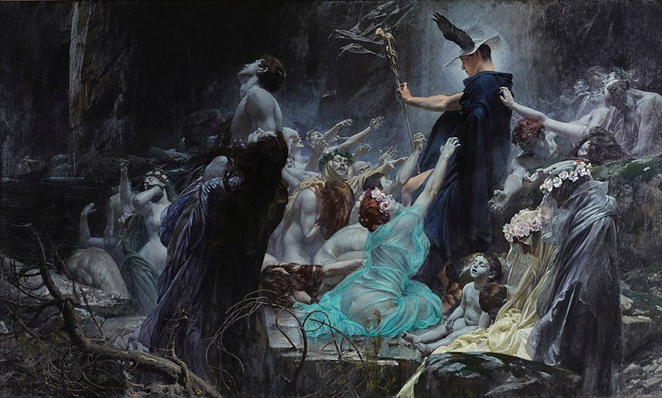
The Souls of Acheron by Adolf Hirémy-Hirschl
It is a gift and a curse these comings and goings of creativity. My whims and inspirations controlled by some hidden muse pulling the strings. Growing up I could never quite decide what creative outlet to focus on, it was more of an impulse towards a certain modality. Drawing — pencil portraiture and realism — playing acoustic guitar, writing poetry and songs. I had my preferred methods of making and expressing but to consciously engage them was largely dependent on a mood that I did have control over. I would follow the impulse of my inner self and how it wanted to express itself, intuitively living.
Creative Expression was always a safe place in my younger years. The healing arts, powerful tools of processing that I used to translate and expound my interior self that was for a long time just so: interior. I had to learn how to express and take thoughts and feelings to the exterior — release them from my body and free myself from their weight. Truly work through my individual issues in a way that is authentically me. Gaining control of a power like that would enable many things.
And I feel like in the last few years I’ve really developed that sense of control. With a Bipolar diagnosis, helpful tools and systems of wellbeing, personalized frameworks for making sense of my reality. I have such a better handle on myself. I know myself better than ever before.
I’ve been able to apply creative frameworks to my own mental health and wellness journey. Use crafted techniques and my own personal system of wellbeing to also work on the preparation and integration of psychedelic experiences. I love to show how my process works, and that progress can be made for a 33 year old POC living with Bipolar. Using creativity to explore and understand my conditions, then implementing and grounding insights in hard, practical reality (the most important part for me in navigating these weird waters, to keep from going off the deep end).
I honor my ancestors in this work. Healers from my father’s side: Grandpa, a Navy veteran and psychiatrist with German lineage, Grandma, a nurse with Swedish roots. They were kind and caring Lutherans. On my mother’s side, a Chinese Grandfather, Indonesian Grandmother — they inspire me to lean into belief through ritual and ceremony, to pray in my own way. My Indonesian heritage is rich with folklore, especially from the island of Bali —the story of the Lion God Barong in conflict with the Demon Witch Rangda resonated with me watching a performance of the story as a child — I also tap into my Chinese ancestry, adopting lessons from the Tao Te Ching. Both sides of my family provide lessons. Clinical and spiritual, science and belief. I find myself in the middle, occupying a beautiful center, a balanced way of being.
It is through years of work in mental health and wellness spaces, recovery and peer-support groups, and then applying the knowledge and experiences gained to the revitalized psychedelic movement, that my most authentic self has been revealed. Truly purpose driven — to help, to teach, to guide — as we go through this complex human experience together, one filled with learning and knowing.

Flower, Pen and Ink - the holy act of writing, symbols that hold meaning and experience.
I’ve often felt pulled by many things, compelled in one way or another. It seems like this sensitivity to feeling is a feature of the vessel I occupy. Impulses, thoughts as they move through my mind, environments affect demeanor, the set and setting changes.
Creative Expression feels like channeling. The Muse whispering to me. I am an antennae picking up signals that are all around, subtle energies and frequencies that move through. They are transferred and take shape, images and messages planted inside the mind, an idea that suddenly appears inside my head. It feels like a purging when I let it out through pen and ink. No longer having to hold onto my thoughts and feelings, the paper holds the weight.
Poetry is such a channeling. A line of words will suddenly appear inside my head, certain sounds, rhymes, consonance, assonance. It’s like a bird flying by. I am compelled to record the initial utterance. And in the act of engaging with the impulse, I am able to reflect further, write more, be inspired by the sudden occurrence and see where it goes. Poems grow from this initial seed planted inside my thoughts. It used to be sporadic, I had no way to track or replicate them. But these days, with meditation, visualization, and breath-work, finding flow states, working the body with swimming, biking, being in nature — I have gained the ability to receive when an opportunity is created. So bountiful is the harvest these days.
I feel that creative expression is a more conscious act, now that I’ve gotten ahold of living with my mental health conditions: Anxiety, Depression, Bipolar. My first (and hopefully only) Bipolar manic episode took place about 3 years ago. A dear family member had her most recent Schizophrenic episode and it caused my own episode. She’s been dealing with her condition for ten years, since her early 20’s when someone she trusted had abused her, and psychedelics were a part of that abuse. It caused immense harm. She wasn’t given support and structure, or love and care at the time. It fractured her. And in an attempt to better understand her and what she experienced, I found my own madness. For both of us, a series of sleepless nights caused an episode.
I am thankful for the tools that helped me navigate my manic episode, it helped me go through an outpatient program with the love, support, and care of family and my wife Maddie. I think what helped me most were my years of self-work: therapy, Cognitive Behavioral Therapy (CBT), meditation, breath-work. My creative outlets: journaling and creative writing, poetry and art and music carried me through. The years of work we put into finding sobriety from alcohol and nicotine 8 years ago. There was a strong foundation I had built for myself. I had a support system to help me. And I found more useful frameworks that have become an integral part of my daily practice, my habits, rituals, ceremonies, so many words for the work.
What works for me is: writing, journaling, drawing, tarot, ritual/practice/ceremony, meditation, breathwork,
visualization, intentional thinking/acting, exercise, a good night’s sleep.

(Intentions set to “Recuperate, rest, rejuvenate” — The cards pulled for:
past (jealousy, fear, bad influence), present (honour and glory brough by a journey), and future (matriarchal down to earth energy, grounded, connection to nature, values, traditions)
In forming my practice, I found that creativity was the crux of it all. It’s what I’ve known most all my life, where my strengths were even as a young child. Creative writing, music, poetry. These things feel like magic, how we create something from nothing. And so when I came across magical systems, I was immediately drawn, learning what they are and how they function in the most practical terms.
I think there is a way to take fantastical and lofty concepts like magic (or magick, to differentiate from street/illusory magic) and distill them down into their core parts, taking the most simple essence and making their implementation practical. We can strip away “the woo” and look at these systems through a secular lens to make them easier to understand and practice, but also remember how powerful they can be when applied with intention (sometimes a thin ledge to walk upon).
In my understanding, magick is the same as creative writing. To write words is to cast spells, create symbols and meaning. Words hold such multitudes, such complex power within them. Expression of self, thoughts, feelings, wishes, goals, experiences, and making them manifested reality. Making magic of the mundane. Infusing daily acts with the power of intention, our rituals and ceremonies are charged. Cosmos and the universe recognizes this act and says “You are now interacting with the system as intended, let’s play this game of thinking and feeling, and so receive what is wished for.”
Words are an “understanding” transferred between us, seeing how our consciousness resonates with shared experience. When we set intentions for psychedelic medicine work, are we not casting spells? When I wish to find concepts like [peace, balance, healing, wellness] I honor these archetypal forces. We bring them down from the heavenly amorphous plane and greater collective unconsciousness (per Carl Jung), down to our physical 3D reality.
A core part of my practice is the concept of Chaos Magic — if it works it works. It’s a fun and inherently creative system to play around in, but one that has yielded undeniable results for me. Belief drives and shapes reality, which is a more malleable thing than many realize. It is taking individual parts of many systems, the ones that resonate most, and then creating your own unique system, your own magick (see also: syncretism, a kind of ancient chaos magic as I understand it).
I came across the concept a few years ago listening to a talk Grant Morrison gave at DisinfoCon in 2000 on chaos magic, sigils and the occult, ***WARNING*** PLEASE TURN YOUR VOLUME DOWN BEFORE PLAYING THE VIDEO — Grant Morrison starts the video with a howl that pierces the cosmos. They explain often lofty concepts like “magic”, “practice”, “ritual” or “belief”, in super simple and practical terms. If you do something with intention and purpose, and believe that doing “that thing”, whether it is prayer, ceremony, lighting a candle or incense, clearing space with sage, or small rituals and spells, you will yield a certain result, you are increasing the chance that your desired outcome will happen.
Grant Morrison wrote themselves into a comic book called The Invisibles as a kind of magical experiment to see what would happen. They made things happen to their comic representation, and in real life these things happened to Morrison. They wrote about their character being physically tortured, having a collapsed lung, and in real life, found themselves in a dire medical condition with infection and a collapsed lung. They wrote the character coming across love interests, and in real life, such a person appeared to them. In the act of creating a narrative about this comic version of themselves, a kind of voodoo magic was inflicted upon their physical self. They created something from nothing with the power of story, affecting corporeal reality through ethereal creation. By broadcasting out the information they put forth through creative expression and storytelling, Morrison is in a way putting out a beacon into the cosmos. And something “out there” caught their expression, and used it as a guidepost to send “the thing” they are casting out. Almost like an ethereal game of Marco Polo. Similarly when we set intentions, we are broadcasting something out. When we set intentions for values such as [PATIENCE], or [BALANCE], or [CLARITY], we put a beacon out to the beyond that draws these concepts nearer to us.
Every person is capable of doing this magical writing to affect reality to certain degrees (maybe not necessarily to the extreme of Morrison’s experiment) but it takes concerted, consistent practice and action to manifest anything into reality. Things don’t just appear out of thin air, they must be evoked through effort, and consistently pulled down towards us. “Action” is the key word, there must be an effort to do, to act, to bring about a thing from a higher plane through physically doing and trying. But many don’t know how their words can affect themselves and those around them, or have forgotten about the power of creativity, words, and art. Expression is an inherently magical act. I think people can be taught to remember what magical power there is in the mundane.
I can then see religious and spiritual systems as a similar kind of creative act. In their time and historical contexts, people were creating works and systems to make sense of their reality. Texts like the Upanishads, the Torah, the Bible, the Tao Te Ching, texts of understanding through storytelling, lessons to be transferred from one person to the next. Articulating an individual’s unique human experience and knowing, asking “Does this resonate with you? Do these teachings provide valuable insight and help guide you through life?” I can see modern day comic books in the same way. Marvel and DC comics contain contemporary pantheons of supernatural beings, of gods, providing us lessons in human experience through narrative, and meaning making. There is power in stories. We have been shaped and influenced by stories growing up, fables, myths, books and movies. They teach us incontrovertible lessons about life and what it means to be good and just, fair and balanced, what it means to be a hero and go on a journey.

The Demon Witch Rangda and the Lion God Barong.
Balinese Folklore Myth.
The process of magick as I understand it, when broken down into its simplest parts, is as simple as setting an intention: [punctuality]. This can be written down, over and over, turned into a sigil, kept in a special hidden place, or scrawled on a piece of paper and then burned. The idea is then in your mind, worked over through your heart and felt in your body, then actuated and manifested into the real world. As I think, so I feel, so I act. These are key elements of magick, of creating and doing. The essential building blocks of occult and esoteric practices, that at their core are about reminding the individual of the immense power they innately hold, as divine beings part of a larger system of consciousness. We are part of one grand create, not separate from it. And we can influence it as such.
Through this learning process and creating my own personal system of wellbeing and belief, I’ve come to work with Hermes as a patron deity. God of communication, bringing messages and guiding souls across heavens and hells and earthly planes. His mercurial nature provides me insight into Bipolar: I am similarly mercurial in my manic highs and depressive lows. He represents specific archetypal concepts and values, “forms” (from Plato), that we understand and inherently know as conscious beings, but do not have a physical representation for. And so Hermes, and the rest of the Greek pantheon, represent specific concepts that are personified, used to tell a story and hopefully transfer their meaning to their devotees. Guideposts to lead through values.
When we pray to gods, we pray to the concepts they represent. If a primary guiding principle is [Communication], my poetry and marketing work, organizing and build community with the Lawrence Psychedelic Society and the larger psychedelic ecosystem are thus guided — I need ways to help show me the path and assist with the work. How can I make sure my message gets across to the right people, that my meanings are transferred and understood, and then action is begun from them?
For Carl Jung, Hermes’ role as a messenger between realms and a guide to the underworld made him the deity of the unconscious mind, acting as a mediator between the conscious and unconscious aspects of the psyche and a guide for inner journeys. Jung regarded Thoth and Hermes as counterparts, emphasizing Hermes’s pivotal role in medieval alchemical practices, which he interpreted as symbolic of the psychological process he termed individuation. In Jungian psychology, Hermes holds particular significance in the study of synchronicity. There are multi-dimensional ways for us to understand our human experience, and interact with consciousness as a whole.
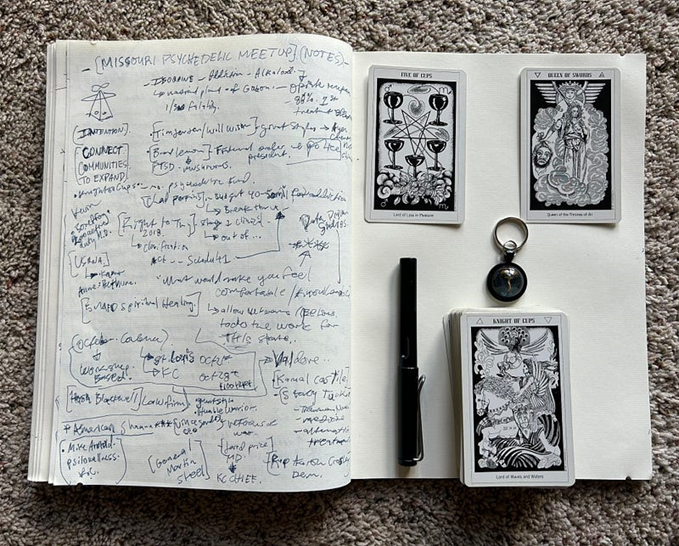
A journal entry and Tarot card spread from a Missouri Psychedelic Meetup in 2021
In my regular practice I keep a journal, tracking schedules, meetings, and tasks with bullet lists, taking notes during trainings and educational workshops, and whatever is most in front of me at the moment. If its worth remembering, I am compelled to write it down.
Journaling seems to help with what I’ve heard is a major issue with many other folks with Bipolar: memory and keeping things organized. To help combat this I’ve got my physical journal, which acts as a calendar and scheduler, complimented by technology: my digital calendar and digital notes. It feels like I keep my brain in multiple places at once, it helps spread the burden of the many thoughts that run through my mind, especially in manic states when the flow is particularly fervent!
The acts of journaling and creative writing have become deeply spiritual practices to me. They’ve also been incredibly helpful in my daily and professional life. My understanding of these seemingly mundane things have become magical by their nature. What we take for granted as commonplace methods, is reinvigorated for me and how I navigate this world. What fun! Magically empowering, immensely comforting.
Another part of my holistic practice is reading Tarot. While also being a fun practice, Tarot is a powerful tool to gain insight into a particular focus or quandary. Less so a tool for predicting the future, I think it’s a way to capture “the present moment” of yourself and the particular problems or goals being worked on. It allows the subconscious and the extra-conscious, the collective unconscious forms, to reach out through the ether to give guidance through archetypal concepts.
Focusing on specific things is like a beacon to universe, conscious thinking and interacting pulls these higher heavenly things down to our dimension. It gives an outside perspective that may help you work through your problems. The cards I pull typically read me like a book, they are what I need in the moment, because I am consciously thinking about my present context, and interacting with the cosmic system in a light and playful way. I think our reality likes this way of interacting, through games and storytelling. Inherent parts of the human experience. I think what people mostly want to do is tell and hear stories, play games; share, learn and commune with each other.
The images below show two different sample readings:
A reading for a friend where I pulled the Star. She was looking for a way out of a funk, was looking for a change in scene, better habits, looking for guidance. The Star brings renewed hope, optimism for future possibilities, spiritual and emotional nourishment. She’s been getting into more witchy and magickal ways of being so it was a good sense of direction to think in new ways, as above, so below, celestially aligned.
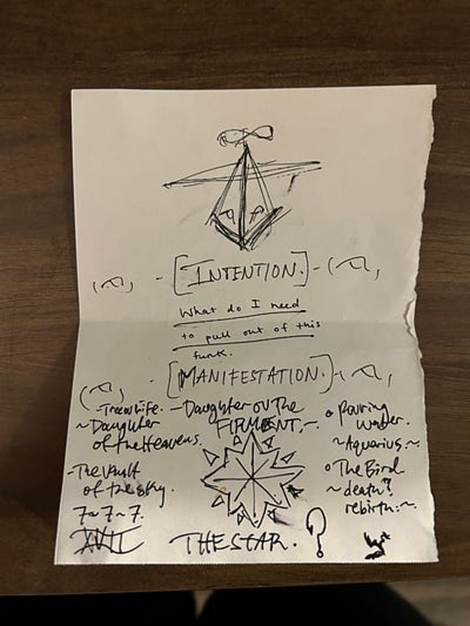
Photo of Tarot card reading by the author Ian Cook.
Intention: [What do I need to pull out of this funk]
Manifestation: XVII - The Star
2. For my New Years card at the start of 2024 I pulled the Wheel of Fortune. It reminded me of the reoccurring nature of the world: cycles, seasons, circles, sometimes you go round enough to go up in a spiral. What goes around comes around. “Going with the flow” has been a good guiding mindset so far this year. Seeds and plans I planted years ago now coming to fruition.
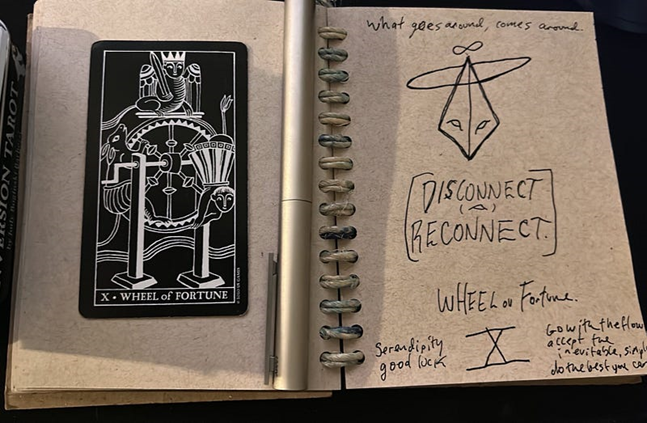
Photo of Tarot card reading by the author Ian Cook.
Intention: [Disconnect, Reconnect]
Manifestation: X - The Wheel of Fortune
Tarot reading is like a combination of intuitive storytelling and a game, interacting with someone seeking answers. Video games were an integral part of my upbringing, similarly telling a story through a game. One of my earliest memories as a kid is sneaking out of a showing of the Jungle Book with family to go to the theater’s arcade, and trying to play whatever I could — my parents had no idea where I went until they eventually found me in the arcade.
This love of games and playful systems, ways to take rules and obstacles and mold them to my wants and needs has been with me for a long time. The desire to play games in the way that I wanted was sated by addons to video game systems like the GameShark. The internet was a hot bed of tips and tricks, people writing walkthroughs to guide you through the game, in-game cheat codes and complex button combinations, complete step by step guides and locations of hidden secrets abound. Having a framework and system, then manipulating it to play the game how you wish. Powerful magick!
I see a parallel of games and ways to engage with “the system” we live in; Tarot, videogames, telling stories, how we can navigate this reality we occupy. If the framework of “games” is placed upon this waking life, how can we play the “game of life”? Tarot can act as a kind of “gamemaster’s tool”, providing hidden insight from the collective unconscious. We ask a question — we receive guidance from beyond, from our subconscious. We can overlay a game system on to our reality and then interact with the system we occupy in such a way that is light and playful, unlocking cosmic interaction and guidance by “playing a game”.
I read Tarot in my own way. After trying a number of different spreads and methods, I developed my own over a few years of practice and iteration. It is an intuitive and interactive process with the one I’m reading for, where I create a physical artifact of the reading in the container we create:
First I draw my sigil, a way for me to focus and enter into a flow state, open a “container” to conduct the reading — then I write the name of the one who seeks guidance. Then I ask the querent to set an [Intention], something you are working on, or would like additional guidance on, something top of mind. Then I’ll have the querent write it on the page, in their own wording, as a type of “spell” they cast.
Then we’ll have them think on their spell (their intention), imagine what it looks and feels like having it come to fruition, the issue resolved, visualize the thing having already happened, attainment. This plucks it from the ether, places the image in one’s mind and their body. As they are consciously focusing and thinking on their intention, I am shuffling the deck. The one who seeks answers is feeling their thoughts in their body, moving it through their very being, spreading energetic intentions throughout.
We take three big deep breaths to really feel into the moment, imagine the [Intention] coming true, what does that look like, feel like? Then whenever the querent feels complete in their asking, they tell me when to stop shuffling. I’ll then split the deck wherever feels good and offer a choice: left or right. This shuffling of the deck represents the chaos of life. But despite this shuffling chaos, these things seemingly outside of our control, I believe each individual being is in control of the choices they make in life. We make choices every day that determine path we walk. We have inherent free will to create our own future, as best we can.
The card is chosen! We’ll then see what comes up with the card(s). We usually do a 1-card or 3-card draw, depending on time and querent request for guidance. We then go over the card received and examine their meanings and symbols in the context of the [Intention] set by the querent. Hopefully provide the individual with a path to tread. I finish the reading by drawing the card or writing down the key themes and symbols represented by the card, so that they have a physical artifact of the process we just went through. They can then later reflect on the reading down the road, see if it helped them “manifest” their “intention”.
Each reading is its own unique container, and so we interpret the card(s) pulled within this completely individualized context. No readings are the same, because no interactions between me and the querent are the same. Life’s unique configuration in that time and space. How do the cards provide a new way to look at the problem? What does the imagery of the card evoke from the individual? What ways can we use the archetypes and higher concepts represented by each card’s name, suit, and number to determine new meanings in our life and guide the way forward?
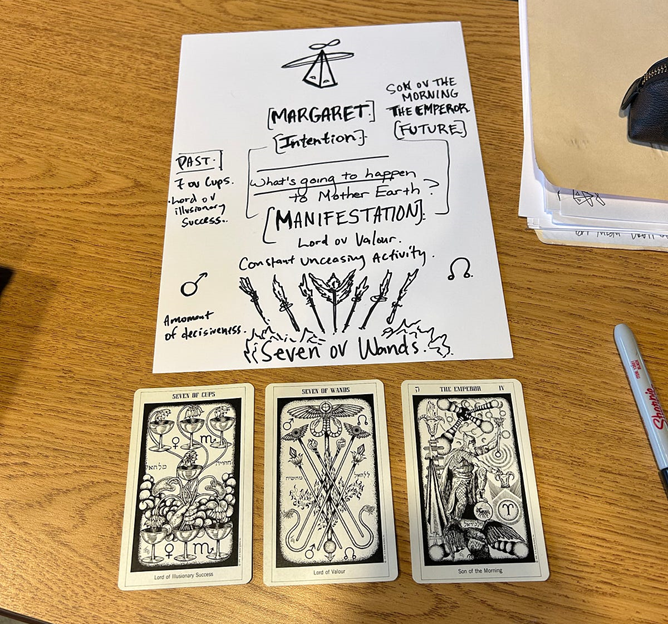
A Tarot reading for Margaret, her Intention: “What’s going to happen to Mother Earth?”
There are many systems and methods out there. I’ve outlined the ones that resonate the most for me on this mental health and wellness journey, and many of them overlap and inform each other. These are the ways I make sense of myself and my reality. These are the ways I honor myself and those that came before me. To make sense of the contexts and sequence of events that have lead me to what I currently am. And where I’m going. I have systems to deal with my mental health, find opportunities for wellness, and find balance in my daily life. A constant, consistent, iterative process. I create this system for myself, I am empowered to manifest the future I envision for myself, bring my intentions to life.
Holistic practices and creative frameworks enable me to prepare for and integrate for what happens to me in life. They help me deal with my mental health conditions, my depression, anxiety, and Bipolar. In preparing for and integrating my psychedelic experiences — I can more easily make sense of the insights and lessons gleaned. The basic framework is in place, it is naturally adapted to medicine work and has been an essential part of my process.
From my psychedelic integration was born the idea of The Cosmic Water Closet (CWC), a creative-writing and journaling class I’ve taught these past few years in mental health and psychedelic-assisted therapy spaces. It has helped individuals develop the skills and practices to capture their thoughts, feelings, and experiences. It helps them better prepare for and record their psychedelic journeys, to later use their writing for ongoing integration and processing. The idea came to me after a mushroom experience, biking out in the Baker Wetlands just south of Lawrence, Kansas, where I live. I was in the shower and the words “COSMIC WATER CLOSET” just popped in my head. I yelled it out to my wife, “write this down, I don’t know what it means yet!”
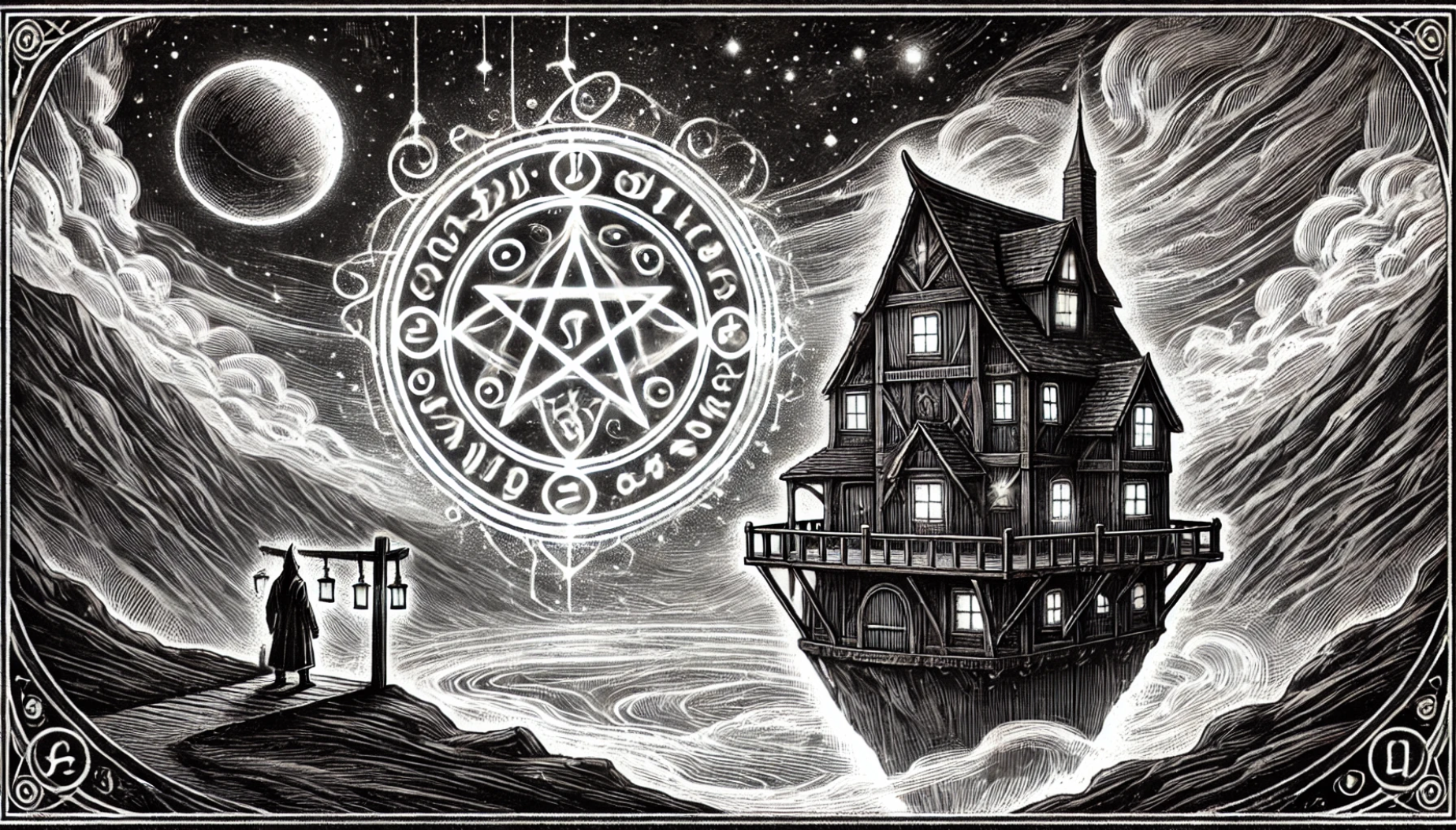
The Cosmic Water Closet
The idea developed more as I thought on it, and what it could be. The Cosmic Water Closet is a shape shifting tavern that floats out in the cosmos, and forms into the needs of those that enter it. Inside the tavern is a Frog-Magus named Yan (a pet-name my wife has for me) who tends the space and hosts creative writing classes, gives Tarot readings, hosts the denizens who happen upon it. I gave this name to a creative representation of me, inspired by Grant Morrison’s process to write myself into a creative work. Frogs are my spirit animal, so much about them resonates with me, their transformative growth through stages, moving in and out of water (I grew up swimming), a hybrid thing (also like my multi-racial background).
The CWC has formed into a creative container I can enter into with friends, to have a safe space for reflection, self-expression, writing poetry, journaling about our feelings and thoughts. We can enter a playful and fun space, play games and tell stories. We can do some heavy lifting mentally and emotionally, and then exit the container. Much like psychedelic experiences, we create a container, a ceremony, a ritual. The CWC has evolved into a grand construct that is innately from me, born from my experiences, and the practices that resonate with me. It is a sacred gift from beyond. It is proof of what magick and wonder that are just waiting to be found, given to us.
These creative frameworks help with my everyday practice, as I work through traumas, and navigate the chaos of just living. There has to be a way to process and get through. There is a way. In each individual is a system waiting to be born, evoked, guided. We each have our own magick, our own strengths innate inside us — how can we find it, develop it, and honor it. In ourselves, through ourselves, for ourselves and others.

My Frog-Magus Yan reading Tarot in The Cosmic Water Closet